What We Treat
Traumatic Brain Injuries (TBIs)
Traumatic Brain Injuries (TBIs)
Traumatic Brain Injuries (TBIs)
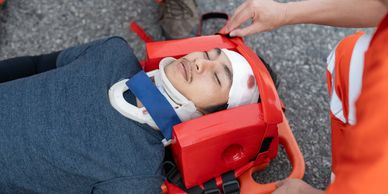
A traumatic brain injury (TBI) occurs when a sudden hit, jolt, or blow to the head injures the brain. The damage may be focal, affecting one area of the brain, or diffuse, involving multiple areas. In the United States, TBI is a major cause of death and disability. Although some brain injuries are mild, such as a concussion, others can be severe and lead to coma or death.
Types of TBIs
Traumatic Brain Injuries (TBIs)
Traumatic Brain Injuries (TBIs)

- Closed brain injury: This happens when the head undergoes sudden movement, impact, or shaking. The skull is not broken or penetrated. However, the brain gets shaken inside the skull, which can cause bruising and tearing of brain tissue and blood vessels. This kind of injury often happens in car accidents, falls, or sports.
- Penetrating brain injury: This happens when an object breaks through the skull and enters brain tissue, such as a gunshot wound or stabbing.
Closed Brain Injuries
Traumatic Brain Injuries (TBIs)
What happens to the brain in a TBI?

- A coup injury is a bruise on the brain at the initial site of impact. The brain can bounce back and hit the other side of the skull, causing another bruise called a contrecoup injury.
- Concussion: A mild brain injury where sudden movement temporarily hurts the brain. You might feel dizzy, confused, have a headache, or feel very tired. Most people recover with rest, but it’s important to take care of your brain while it heals.
- Diffuse Axonal Injury (DAI): A more serious injury where the brain twists or shifts enough to tear the long nerve fibers that connect different parts of the brain. This can affect many areas of the brain and sometimes cause a coma. DAI can be hard to see on regular brain scans, even though it can be severe.
What happens to the brain in a TBI?
What happens to the brain in a TBI?
What happens to the brain in a TBI?

- A primary brain injury is the immediate structural damage to the brain that occurs at the moment of trauma, such as a car crash, gunshot, or fall. Examples include contusions, bleeding, shearing injuries, and skull fractures. Primary brain injury can trigger secondary brain injury.
- A secondary brain injury is delayed damage that occurs over time—in the hours or days after a primary injury. Swelling, cell dysfunction, impaired blood flow, and other changes in the brain during this time can worsen the initial injury and cause additional brain damage.
Possible Results of a Brain Injury
What happens to the brain in a TBI?
Possible Results of a Brain Injury

- Cognitive / Thinking Problems
- Movement / Motor Problems
- Sensory Changes & Body Awareness
- Communication & Language Difficulties
- Everyday Life Problems (Functional Deficits)
- Social Challenges
- Mood & Personality Changes
- Fatigue & Body Regulation
- Seizures
Brain Imaging Tests
What happens to the brain in a TBI?
Possible Results of a Brain Injury
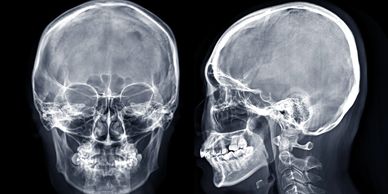
- X-ray - A simple, quick picture mainly used to check bones, such as the skull or spine.
- CT Scan (Computed Tomography) - A special kind of X-ray that takes detailed pictures of the brain and other parts of the body. Doctors use it to find injuries like bleeding, swelling, or broken bones.
- MRI (Magnetic Resonance Imaging) - Uses magnets and radio waves to create detailed images of soft tissues, including the brain. MRIs are better than CT scans for detecting small or subtle brain injuries, tissue changes, or tumors.
- DTI (Diffusion Tensor Imaging) - A specialized type of MRI that maps tiny nerve fibers (axons) in the brain. DTI is useful for identifying damage to the brain’s connections, which may not show up on CT or regular MRI scans.